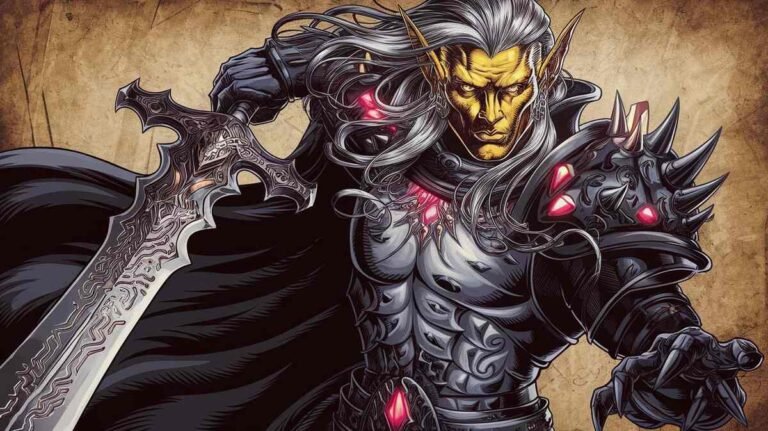
A Gallery of Notable Githyanki Names & Characters and Their Stories
When you delve into the stark, silver-laden realms of the Astral Plane, few sounds are as distinctive, or as chilling, as the guttural pronouncements of the githyanki. Their very names are weapons, declarations, and epitaphs – etched in the harsh consonants and proud syllables of a race forged in rebellion and tempered by an eternity of war. This isn't just a list; it’s a journey into A Gallery of Notable Githyanki Names & Characters, offering a window into the souls of these fearsome astral raiders from Dungeons & Dragons and the captivating world of Baldur's Gate 3. Understanding a githyanki’s name is to understand their lineage, their rank, their deeds, and perhaps, even their ultimate destiny.
At a Glance: Decoding Githyanki Identity
- Who They Are: Fierce, disciplined warriors from the Astral Plane, known for their psionic powers and red dragon allies.
- Origin: Created by Charles Stross in 1981 (AD&D 1st Edition), with a significant resurgence in popularity thanks to Baldur's Gate 3.
- Names as Culture: Githyanki names are more than labels; they reflect military rank, cultural values, and personal achievements.
- Key Sounds: Expect brutal consonants like 'th,' 'kh,' 'zh,' and distinctive apostrophes (glottal stops).
- Layered Meanings: Names often grow in complexity with rank or honor, sometimes incorporating clan names or earned titles.
- Astral Influence: Many names echo themes of the void, stars, silver, or psychic might—their very home shapes their identity.
The Githyanki Identity: A Primer in Steel and Psionics
To truly appreciate a githyanki name, you must first grasp the essence of the githyanki themselves. Picture a race born from the crucible of slavery, rising up against their mind flayer overlords, and then forging an empire across the endless, silver seas of the Astral Plane. This is the legacy of the githyanki, a people defined by their militant discipline, their unyielding strength, and an almost fanatical devotion to their Lich Queen, Vlaakith.
Their society is a rigid hierarchy, a vast military machine where every githyanki knows their place and strives for advancement through conquest and deed. Allies of red dragons and eternal enemies of the mind flayers, their culture is one of constant warfare and survival. When Baldur's Gate 3 launched in 2023, the surge of interest was palpable, leading to a reported 40% increase in githyanki character creation – a testament to their compelling, albeit brutal, allure. Their language, like their lives, is sharp, precise, and devoid of softness, a philosophy deeply embedded in their naming conventions.
The Language of Steel and Stars: Understanding Githyanki Naming Principles
Imagine a name as a battle cry, a declaration of intent, or a silent testament to a thousand battles. That’s how githyanki approach nomenclature. Their names aren't mere identifiers; they are condensed narratives of a warrior's soul, reflecting their harsh language and even harsher culture.
Here’s how to break down the elements that make a githyanki name resonate with authentic power:
- Harsh Consonants & Glottal Stops: Forget soft, flowing sounds. Githyanki names bite and snap. Think 'th' (as in path), 'kh' (as in loch), 'zh' (as in measure), and liberal use of apostrophes. These apostrophes aren't just decorative; they represent glottal stops, those abrupt breaks in sound that make their speech feel sharp and decisive.
- Example: Lae’zel, Zith’mak, Keth’var.
- Military Rank & Syllabic Weight: A githyanki’s position in their martial hierarchy is often reflected in their name’s length and complexity. Younglings or those of lower standing typically have shorter, more direct names. As a githyanki rises through the ranks, their name often gains additional syllables or elements, signifying earned status, conquests, or honored lineages.
- Example: Keth’il (youngling) vs. Kith’rak Keth’var’thol’meiros (supreme leader).
- Astral Echoes & Psionic Hints: The Astral Plane is more than just their home; it's intrinsically linked to their being. Many githyanki names carry references to astral concepts like silver, void, stars, or subtle nods to their powerful psionic abilities. This connection grounds their identity in the very fabric of their existence.
- Example: Aaryl Voss (Star’s Fury), names incorporating 'void' or 'silver.'
- Cultural Reflection: A Warrior’s Heritage: Every githyanki name embodies a proud, warrior heritage. There’s an inherent sense of strength and defiance, a history of overcoming oppression and dominating their foes. Their names aren't beautiful in the conventional sense; they are beautiful in their raw, martial elegance.
- Structured Syllable Patterns: Most githyanki personal names tend to be 2-3 syllables long, culminating in strong, often percussive endings. This makes them feel impactful, almost like a command or a battle cry.
- Names as Backstory: Beyond rank, names can hint at a githyanki’s specific journey. A "youngling" name is short and simple. An "exile" might carry a suffix indicating their banishment. An "honor veteran" could have a name adorned with elements reflecting their legendary deeds. It's a living history.
Building a Githyanki Persona: Name Categories and What They Signify
Githyanki names are a tapestry woven from personal identity, lineage, and achievement. They evolve as a githyanki does, often adding layers to signify new status or honor. Here's a breakdown of the various categories and what they communicate:
Personal Names: The Foundation
These are the core names given at birth or upon reaching a certain age, often reflecting a nascent warrior spirit.
- Female Names: Often fierce and powerful, yet sometimes with a subtle cadence.
- Examples: Aaryl Voss (which translates roughly to "Star's Fury," a potent combination), Yith’ara, Mela’keth, Lae’zel (meaning "Warrior’s Path," exceptionally fitting).
- Male Names: Tend to be gruff, resonant, and direct, like a strike from a silver sword.
- Examples: Zar’tok Voss (meaning "Relentless Vengeance"), Zith’mak, Vrak’thos.
- Unisex Names: While less common for prominent figures, some names carry a gender-neutral strength, allowing for flexibility.
- Examples: Vex’thol, Kara’mek.
- Youngling Names: Shorter, simpler names, reflecting their developing status before they’ve earned their true place. They are placeholders, awaiting the trials and triumphs that will shape their adult identities.
- Examples: Keth’il, Mira’ek.
Specialized Roles: Names that Echo Destiny
Certain paths within githyanki society bestow unique naming conventions or suffixes.
- Gish (Warrior-Mages): These rare and formidable githyanki blend martial prowess with powerful psionics. Their names often combine the strength of a warrior with a hint of mystic resonance.
- Examples: Vorthak’melos, Kelara’thon.
- Warlock (Servants of the Lich Queen): Those who have pledged themselves directly to Vlaakith's dark will often incorporate her name into theirs, signifying absolute fealty. It's a badge of both honor and servitude.
- Examples: Thek’vlaakith, Mor��vlaakithara.
Rank and Command: The Evolution of a Name
As githyanki ascend the military ladder, their names expand, acting as living résumés of their accomplishments. This is where the layers truly begin to manifest.
- Knight (Elite Commanders): Knights are veteran warriors and strategists, leading smaller companies or specialized units. Their names often reflect this heightened authority.
- Examples: Knight Zelavar’thon, Supreme Kith’rak Vorthek (Vorthek here is a Kith'rak who has attained the rank of Knight Commander, adding the 'Supreme' honorific).
- Kith’rak (Supreme Leaders): The Kith’rak are high-ranking military commanders, often leading entire creches or fleets. Their names are weighty, commanding, and usually longer, signifying immense power and influence.
- Example: Kith’rak Vlaakith’thon. You can learn more about their brutal society and military structures by exploring resources on githyanki culture and society.
Lineage and Locale: Clan and Creche
Beyond personal names and rank, githyanki identify with their lineage (clan) and sometimes their place of origin (creche).
- Clan Names (Lineages): These are akin to surnames, passed down through generations, often evoking powerful imagery or historical deeds.
- Examples: Clan Mor’thekara, Clan Vel’korathon, or descriptive names like "Silver Storm," "Red Flame."
- Creche Names (Location-Based Surnames): Sometimes, a githyanki might append their creche's name, especially when interacting with those from other strongholds. Creches are critical to githyanki upbringing and indoctrination.
- Examples: of Tu’narath (their capital), of Morthek’vel.
Earned Glory: Honor Names
These are the most potent additions to a githyanki’s name, bestowed after monumental achievements. They are symbols of personal power and public recognition.
- Honor Names (Earned Elements): These suffixes are appended to a githyanki’s existing name, detailing a specific, celebrated deed. They are the ultimate bragging rights.
- Examples: 'Dragonbane' (for slaying a dragon), 'Mindripper' (for defeating a mind flayer, perhaps even tearing an elder brain from its skull), 'Voidwalker' (for navigating perilous astral expanses), 'Silverstorm' (for unmatched prowess in astral combat).
Echoes of Time: Ancient and Modern
Githyanki names, while consistent in principle, have seen subtle shifts over their long history.
- Ancient Names (Time of Gith): These names hark back to the era of their liberation, carrying historical weight and often belonging to legendary figures.
- Examples: Gith’morthek, Vlaakith’ara, Zerthim’kol.
- Modern Names: While adhering to core principles, modern names might show slight variations or incorporate newer cultural elements, though the harshness remains.
- Examples: Vex’kythera, Kara’nethen.
If you're looking to forge a name that truly embodies these principles, a handy Githyanki name generator can be an invaluable tool to get started.
Legends of the Void: Notable Githyanki and Their Stories
The tapestry of githyanki history is embroidered with the names of formidable individuals, each a legend (or a tyrant) in their own right. These figures are the bedrock of githyanki identity, their names resonating with power and recounting epic tales of rebellion, tyranny, and survival against the hated mind flayers. The long war with the mind flayers is central to their identity, a conflict you can read more about at Mind Flayer-Githyanki Conflict: An Overview.
Gith: The Liberator
The very name 'Gith' echoes through the ages, a primal scream of defiance. She was the legendary warrior who led her people in a brutal war against the mind flayers, shattering their enslavement and forging the githyanki into a free, albeit militant, race. Her name is short, sharp, and decisive – reflecting her actions. After securing freedom, however, her desire for absolute conquest sowed the seeds of a schism that would forever divide her people. She is the origin point, the foundational spirit of the githyanki.
Vlaakith: The Lich Queen
The most feared and dominant figure in modern githyanki society, Vlaakith is the Lich Queen, the undying monarch who rules from her fortress-city of Tu’narath on the Astral Plane. Her name, Vlaakith, has become synonymous with absolute power, tyrannical control, and chilling longevity. Warlocks who serve her often incorporate her name into their own, like Thek’vlaakith, a mark of ultimate fealty. She consumes the souls of her most powerful gish, preventing any challengers to her throne, a grim testament to her ruthlessness.
Zerthimon: The Betrayer (or The Visionary)
To the githyanki, Zerthimon’s name is a curse, forever linked to the "betrayal" that split their race. Zerthimon was a revered leader under Gith, but he challenged her relentless pursuit of conquest, arguing for peace and internal reflection. His name, Zerthimon, sounds ancient and wise, a contrast to the brutal sounds of warfare. His followers, embracing wisdom over war, became the Githzerai, eternal rivals to the githyanki.
Lae’zel: The Ascendant Warrior (Baldur's Gate 3)
Perhaps the most recognizable githyanki of the modern era, Lae’zel is a central companion in Baldur's Gate 3. Her name, meaning "Warrior's Path," perfectly encapsulates her unwavering commitment to githyanki ideals, her martial prowess, and her fierce loyalty (once earned). Throughout her journey, her story reflects the rigid expectations of her people, her aspirations to join Vlaakith’s honor guard, and the difficult choices she faces, making her a compelling character study of githyanki identity in flux. She is a true warrior, embodying the fierce spirit of her people, even when her beliefs are challenged. Learn more about her journey and the larger githyanki role in the game by looking up Githyanki in Baldur's Gate 3.
Voss: The Stalwart Commander
Kith’rak Voss, often simply referred to as Voss, is another pivotal githyanki character in Baldur’s Gate 3. His name carries a strong, direct resonance, fitting for a seasoned and formidable warrior. Voss is a Kith'rak, a high-ranking military commander, initially a loyal servant of Vlaakith. His character embodies the unwavering resolve and pragmatic nature of a veteran githyanki. His journey, like Lae'zel's, challenges traditional githyanki dogma, showcasing that even the most hardened warriors can be swayed by truth. His loyalty to the concept of githyanki freedom, even if it means defying Vlaakith, makes him a compelling figure. His steadfastness is a hallmark of many high-ranking githyanki.
Orpheus: The Githyanki Prince
The very name Orpheus stands out in the githyanki lexicon, often feeling less harsh, more ancient, almost regal – a stark contrast to typical githyanki names. This reflects his unique and tragic position as the true heir to Gith and the rightful leader, imprisoned for centuries. His existence represents a profound threat to Vlaakith's reign and a potential catalyst for a new era for his people. He embodies a forgotten lineage, a beacon of hope for many who yearn to be free from Vlaakith's tyranny.
Tu’narath: The Silver City
While not a character, Tu’narath is arguably the most famous githyanki "entity"—their sprawling capital city, resting on the corpse of a dead god in the Astral Plane. Its name evokes images of silver, grand structures, and ancient power, a stark reflection of the githyanki's ambition and their mastery of their astral domain. It is the heart of their empire, a testament to their enduring will.
Kith’rak: The Title of Command
This isn't a personal name, but a title – Kith’rak – that signifies a supreme leader. It’s a term of immense respect and fear, often used before a personal name, like Kith’rak Voss. The very sound of "Kith’rak" is commanding, embodying the ultimate authority and military might within githyanki society.
Crafting a Name of Power: Practical Tips for Githyanki Naming
Whether you're creating a character for your next campaign or crafting a compelling story, naming a githyanki should be a deliberate act. It's about more than just stringing together harsh sounds; it's about imbuing the name with meaning and context.
- Start with Core Syllables: Begin with 2-3 strong syllables that feature those signature harsh consonants (
th,kh,zh,v,z,k).
- Good: Keth, Vrax, Mela, Zar, Yith.
- Avoid: Lily, Simon, Anya (too soft).
- Integrate Glottal Stops: Don't shy away from the apostrophe. Use it to break up sounds or emphasize a syllable, creating that distinctive githyanki cadence.
- Example: Lae’zel, Zith’mak, Keth’var.
- Consider the Character’s Rank:
- Youngling/New Recruit: Keep it short and simple (e.g., Keth’il, Mira’ek).
- Seasoned Warrior/Knight: Add a syllable or a clan name (e.g., Keth’var’thol, Knight Zelavar’thon).
- High Commander (Kith’rak): Embrace complexity with multiple elements (e.g., Kith’rak Keth’var’thol’meiros).
- Weave in Backstory/Personality:
- Exile: Add a suffix indicating their banishment or isolation (e.g., Keth’varash, Morthek’sil – 'ash' or 'sil' perhaps implying 'lost' or 'broken').
- Psionic Master (Gish): Use sounds that hint at intellect or arcane power (e.g., Vorthak’melos).
- Loyalist to Vlaakith (Warlock): Incorporate 'Vlaakith' or a variant into the name (e.g., Mor’vlaakithara).
- Add Honorifics Judiciously: These are earned, not given lightly. If your character has performed an extraordinary feat, choose a powerful honor name that reflects it.
- Example: Aaryl 'Dragonbane' Voss, Zith'mak 'Mindripper'. These titles often precede or follow the personal and clan name, like “Knight Zelavar’thon ‘Voidwalker’.” The alliance with Red Dragons is a significant part of githyanki history and strategy; explore more about this relationship at Red Dragons: Githyanki Allies.
- Avoid Modern Earth Names: A githyanki named "Steve" simply won't resonate. Stick to the established phonetic palette.
- Say it Aloud: Does it sound powerful? Does it feel like a name that could be shouted across a battlefield or whispered in a tactical briefing? If not, tweak it.
- Pitfall to Avoid: Overly Long Names for Junior Ranks: A young githyanki with a five-part name doesn't fit the cultural context. Names are earned and expand with deeds.
- Pitfall to Avoid: Softening the Sound: Resist the urge to make a githyanki name "pretty" in a human sense. Its beauty lies in its ferocity.
Deeper Dives into the Githyanki Empire: Common Questions Answered
We’ve covered the mechanics, but let’s tackle some common curiosities about these fascinating names.
What do githyanki names mean?
Githyanki names are primarily phonetic constructions that evoke a sense of power, discipline, and aggression. While some names, like Lae’zel ("Warrior’s Path") or Aaryl Voss ("Star’s Fury"), have known translations, many are more about their sound and the cultural associations they carry. They signify rank, lineage, and deeds through their structure and added elements rather than direct semantic translation for every syllable.
Are githyanki names always long?
No, not always. The length of a githyanki name often correlates with their rank and achievements. Younglings or newly initiated warriors will have shorter, simpler names (e.g., Keth’il). High-ranking commanders (Kith’rak) or those with many honorifics will have much longer, multi-part names.
How do githyanki earn new name elements?
Githyanki earn new name elements, typically honorifics or clan affiliations, through significant martial prowess, strategic victories, or profound service to the Lich Queen Vlaakith. These are not merely granted but achieved through blood and steel. For instance, defeating a mind flayer could earn the 'Mindripper' honorific, while a major victory in the Astral Plane might earn a new clan suffix. The Astral Plane itself is a realm of infinite possibilities and dangers, critical to githyanki identity; learn more about it here: The Astral Plane: Githyanki Home and Battlefield.
What's the difference between a Kith'rak and a Knight?
Both are high-ranking military commanders. A Knight is an elite commander, often leading smaller, specialized units or acting as a strategic advisor. A Kith'rak is a supreme leader, typically commanding entire creches, fleets, or major military operations. A Kith'rak holds a higher overall authority, though a Knight can also be a Kith'rak (e.g., "Supreme Kith'rak Vorthek" implies a Kith'rak who has achieved the rank or distinction of 'Supreme Knight Commander').
Why are Githyanki names so harsh?
Their names reflect their brutal history and culture. Born from slavery, they fought a vicious war for freedom, fostering a militant, survival-of-the-fittest mindset. Their language, like their society, is designed for command, clarity, and intimidation. Soft, gentle sounds have no place in a language built for battle cries and declarations of conquest.
Beyond the Name: The Legacy of a Warrior Race
The names in A Gallery of Notable Githyanki Names & Characters are far more than just labels; they are the distilled essence of a people. They tell tales of rebellion, tyranny, and an unyielding will to dominate the cosmic stage. Each syllable, each glottal stop, each appended honorific is a whisper of history, a shout of defiance, or a silent promise of future conquests.
As you explore the worlds where githyanki roam, remember that their names are living artifacts, evolving with their deeds and reflecting their place in a universe that demands strength above all else. To truly know a githyanki is to understand the language of their name – a language of steel, stars, and an indomitable will that echoes across the Astral Sea. May your own githyanki endeavors be as storied as those whose names grace this very gallery.